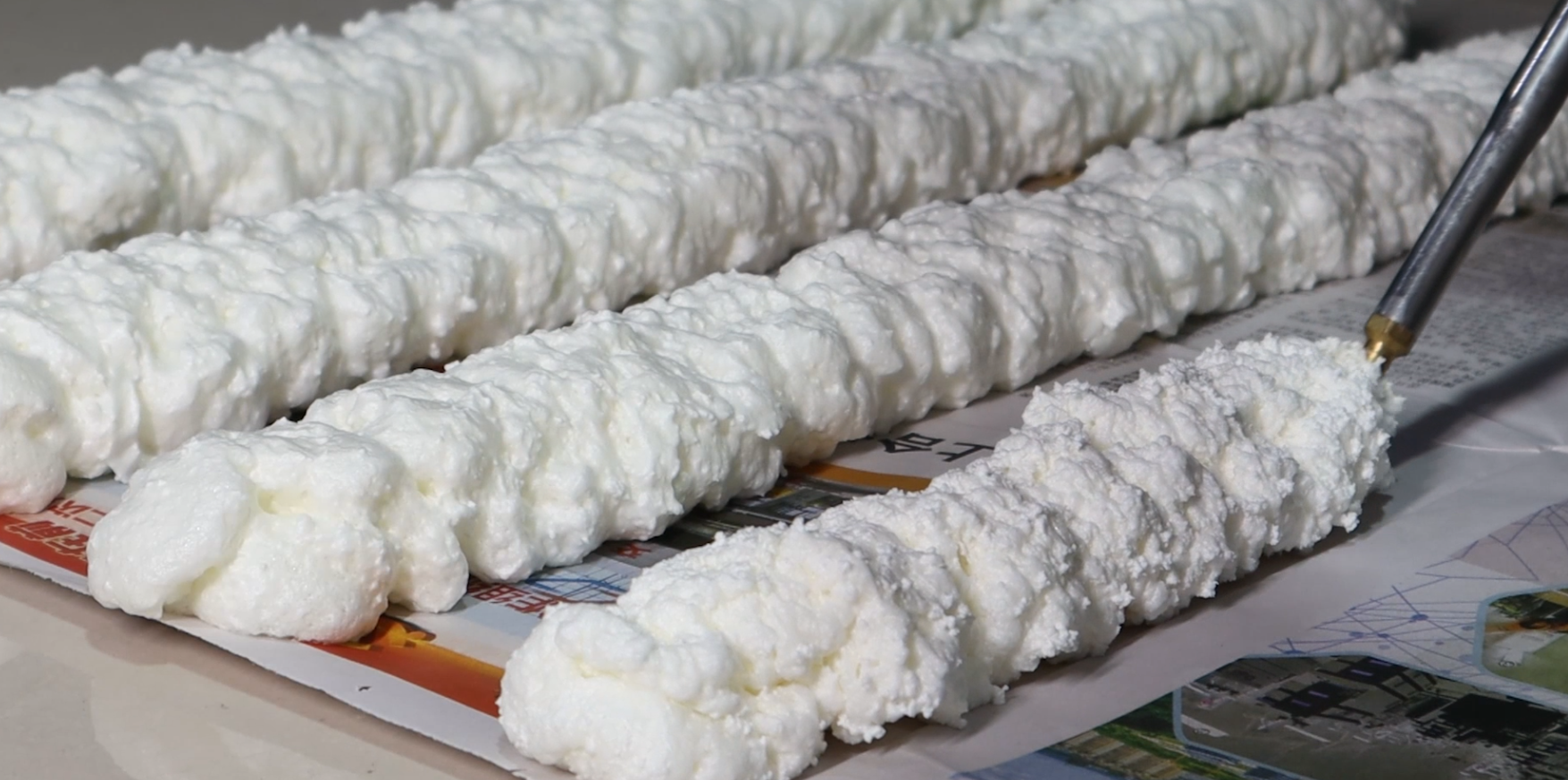
 Have you ever wondered what happens when PU foam is sprayed into a gap? Why does it expand, harden, and become a lightweight material that can help fill gaps and improve insulation?
PU foam, also known as polyurethane foam, is widely used in construction, particularly for window and door installation, gap filling, insulation, and sealing. However, not all expanding foam products have the same performance. Expansion rate, yield, adhesion, cell structure, and curing behavior can vary significantly between formulations.
For contractors, window and door manufacturers, distributors, and building-material buyers, understanding these differences is important when selecting the right product.
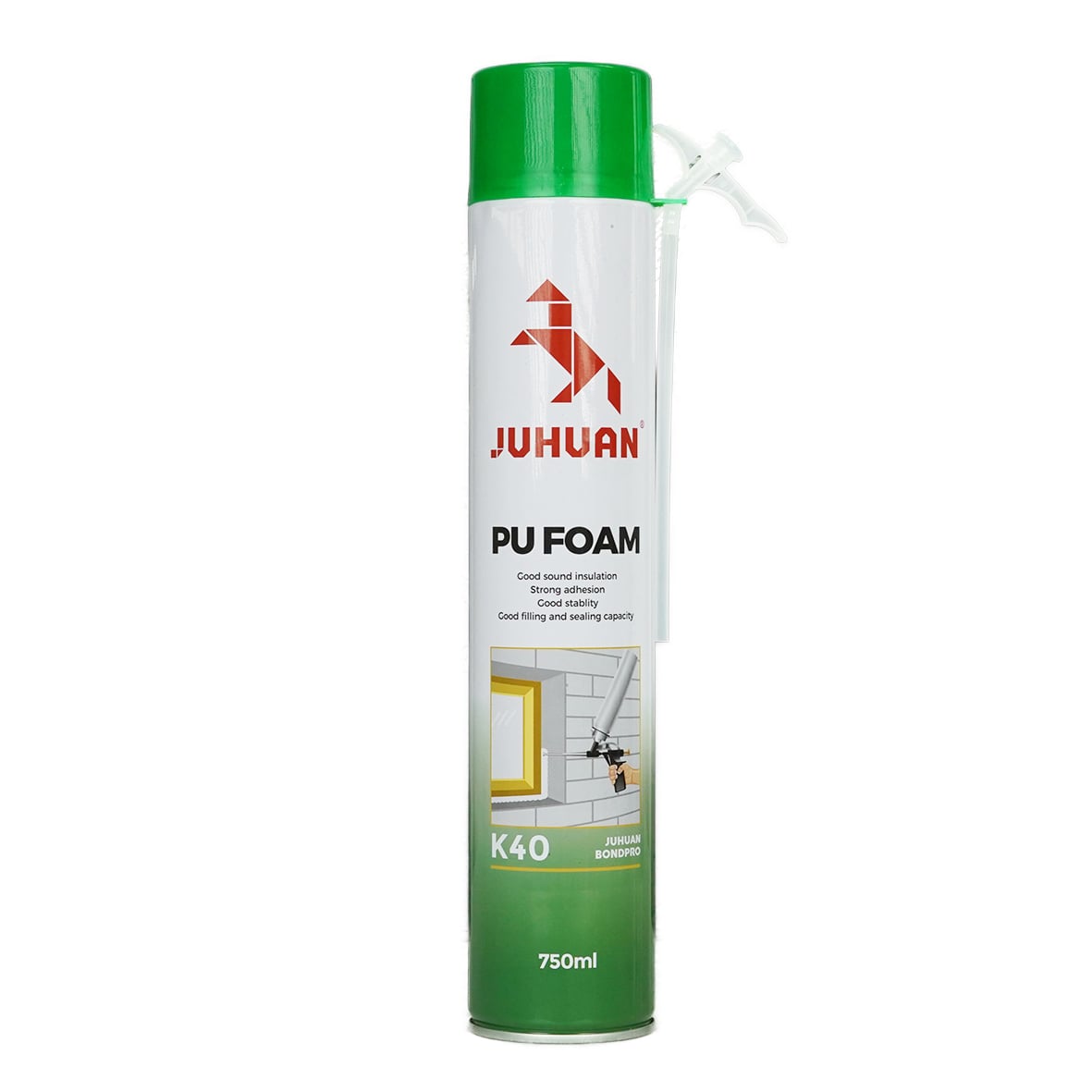
PU foam is a polyurethane-based material that expands and cures after application. One-component PU foam is commonly packaged in aerosol cans and reacts with moisture during curing.
The basic formulation may include reactive components, catalysts, surfactants, blowing agents, and other additives. These components work together to create the foam's cellular structure and determine its final performance.
This is why two products that look similar in a can may behave very differently during application.
When the foam is released from the can, the blowing system generates gas while the polyurethane material begins to form its cellular structure. The balance between expansion and curing affects the final foam structure, density, and dimensional stability.
For construction applications, controlled expansion is often more important than simply achieving the highest possible expansion.
Key Point: The right PU foam should be selected according to the application, not simply by its advertised yield.
Although commercial formulations vary between manufacturers, the production process generally includes several important stages.
Raw materials are selected and mixed according to the required performance. Manufacturers may adjust the formulation to achieve different characteristics such as:
For example, low expansion PU foam for window and door installation requires good expansion control to reduce excessive pressure around frames.
After formulation, the product is filled into aerosol cans together with a suitable propellant system and valve.
Common sizes include 750ml PU foam, 500ml PU foam, and 300ml PU foam.
Before shipment, manufacturers should evaluate important properties such as yield, expansion, curing time, adhesion, density, and dimensional stability.
For B2B buyers, these technical characteristics are often more meaningful than packaging size alone.
Different projects require different foam characteristics. The following are some common types.
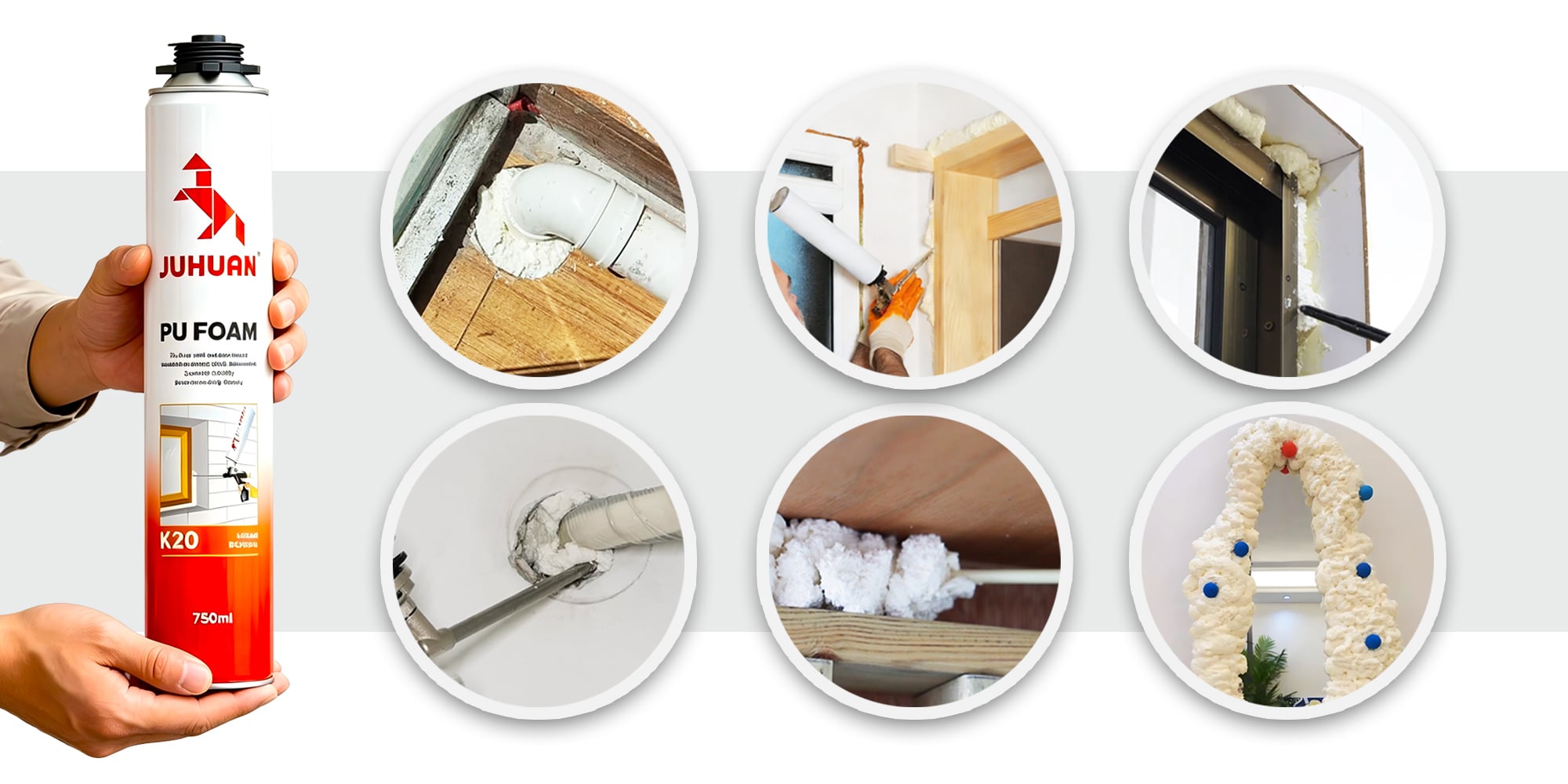
General-purpose expanding foam is mainly used for filling gaps, holes, cavities, and irregular spaces.
Typical applications include:
It is a practical choice when general gap filling is the primary requirement.
Low expansion PU foam is designed to provide more controlled expansion.
It is particularly useful for window and door installation, where excessive expansion pressure may make frame installation more difficult.
When choosing foam for these applications, buyers should consider expansion control, adhesion, curing behavior, and dimensional stability together.
Fire retardant PU foam is designed for applications where specific fire-performance requirements exist.
However, fire-retardant foam should not automatically be considered completely fireproof. Buyers should check the product's applicable testing standards, classification, certification, and intended application.
Closed cell PU foam contains a high proportion of closed cells. This structure can contribute to lower water absorption and useful thermal insulation properties.
For projects involving insulation or moisture-related requirements, cell structure can therefore be an important purchasing consideration.
One of the most common applications is PU foam for window and door installation.
The foam can fill the space between the frame and surrounding construction materials while helping provide thermal and acoustic insulation.
Correct application is just as important as choosing the right product.
PU foam can expand into irregular spaces that are difficult to fill with rigid materials.
It is commonly used around:
Its ability to expand and fill uneven spaces is one of the main advantages of polyurethane foam.
For contractors, distributors, and importers, choosing a PU foam should go beyond comparing price and can size.
Consider the following checklist:
|
What to Check |
Why It Matters |
|
Yield |
Determines filling efficiency |
|
Expansion |
Affects application control |
|
Adhesion |
Determines compatibility with substrates |
|
Curing time |
Influences installation efficiency |
|
Dimensional stability |
Helps reduce shrinkage and deformation |
|
Cell structure |
Influences insulation and moisture performance |
|
Packaging |
Supports different application methods |
|
OEM capability |
Important for private-label projects |
For example, a contractor installing PVC windows may prefer a low expansion PU foam rather than a very high-expansion product, because controlled expansion can make frame installation easier.
This is an important point for professional buyers: the highest-yield foam is not automatically the best foam for every application.
At Shandong Juhuan New Material Technology Co., Ltd. (JUHUAN), we focus on developing polyurethane foam products for professional construction and building-material applications.
Our product range can cover different application requirements, including:
As an OEM PU foam manufacturer, JUHUAN can work with customers to match product performance, packaging, and market requirements.
Yes. PU foam is the common abbreviation for polyurethane foam.
750ml PU foam is commonly used for larger gap-filling, insulation, and window and door installation applications. Actual yield depends on formulation and application conditions.
Low expansion foam can provide better expansion control around window and door frames. The appropriate product should still be selected according to the frame material, joint size, and project requirements.
Not necessarily. Fire performance should be evaluated according to the specific product classification, testing, and certification.
Yes. Depending on the manufacturer, OEM projects may include can size, valve type, packaging, labeling, product grade, and performance requirements.
PU foam is more than an expanding filling material. Its performance depends on formulation, cell structure, expansion behavior, adhesion, curing, and application conditions.
For professional buyers, selecting the right PU foam sealant means matching product performance with the actual construction requirement.
Whether you are looking for Low Expansion PU Foam, Fire Retardant PU Foam, 750ml PU Foam, PU Foam for Window and Door Installation, Closed Cell PU Foam, or an OEM solution, JUHUAN can help develop the right polyurethane foam solution for your market.
Looking for a reliable OEM PU foam manufacturer? Contact JUHUAN to discuss your product requirements, packaging options, and private-label project.
 Hot News
2026-09-22
2026-07-01
2026-06-18
2026-06-04
2026-05-16
2026-05-06
Copyright © 2025 by Shandong Juhuan New Material Technology Co., Ltd. - Privacy policy
 EN
EN