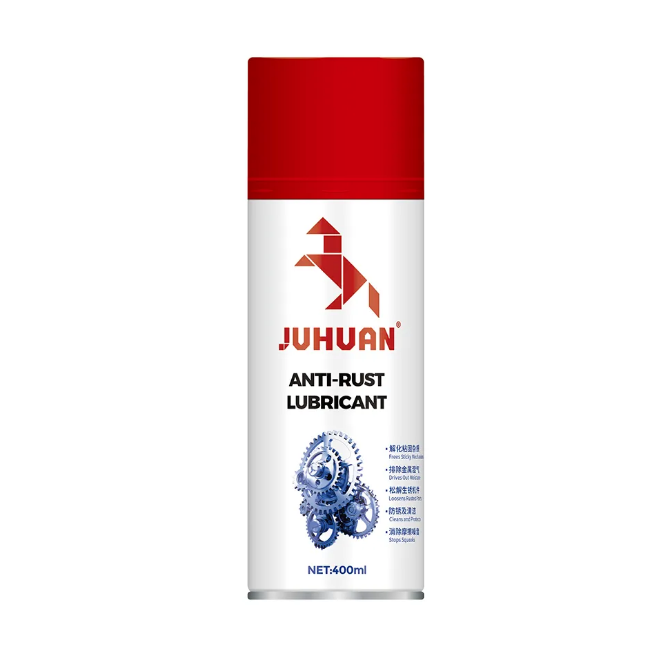
Metal components in industrial equipment, outdoor hardware, and automotive systems face a dual threat: oxidation on one side and mechanical wear on the other. Anti-rust lubricant addresses both simultaneously, which explains why it has become a standard maintenance item across construction sites, workshops, marine environments, and household toolboxes. The chemistry behind it is straightforward, but the application details make the difference between a coating that lasts months and one that washes off in the first rain.
Most anti-rust lubricants combine three functional components. A carrier, typically a petroleum-based or synthetic oil, delivers the active agents to the metal surface. Rust inhibitors, usually compounds like zinc naphthenate, calcium sulfonate, or vapor-phase inhibitors, form a molecular barrier that displaces moisture and prevents electrochemical oxidation. Lubrication additives, which may include polytetrafluoroethylene (PTFE) particles or molybdenum disulfide, reduce friction at contact points.
The corrosion protection mechanism follows ASTM B117 salt spray test standards. A quality anti-rust lubricant product should maintain protection for a minimum of 72 hours under continuous salt fog exposure for general-use grades, and considerably longer for heavy-duty industrial formulas. This standard provides a consistent benchmark for comparing products across manufacturers.
| Product Type | Base Fluid | Corrosion Protection | Lubrication Level | Typical Application |
|---|---|---|---|---|
| General anti-rust spray | Petroleum base | 72-100 hrs salt spray | Medium | Household tools, hinges |
| Industrial anti-rust oil | Synthetic base | 200-500 hrs salt spray | High | Machinery, bearing surfaces |
| Dry film lubricant | Carrier + PTFE | 100-300 hrs | Medium-Low | Threaded fasteners, slides |
| Calcium sulfonate grease | Thickened oil | 500+ hrs | High | Marine, outdoor equipment |
Applying anti-rust lubricant correctly takes more attention than most people give it. Spraying over a dirty or corroded surface seals contamination in, which accelerates corrosion underneath the coating rather than stopping it.
1.Clean the surface first. Remove existing rust, scale, and grease with a wire brush, abrasive pad, or appropriate solvent degreaser. For light surface rust, a rust converter can stabilize the iron oxide before lubrication.
2.Dry the surface thoroughly. Moisture trapped beneath the coating creates the exact electrochemical conditions the lubricant is trying to prevent.
3.Apply in thin, even coats. A single heavy application tends to run and pool, leaving thin spots in between. Two light passes give better coverage.
4.Allow the carrier fluid to flash off before bringing the component into contact with other surfaces, unless the product is specifically a wet-film lubricant.
5.Reapply on schedule. Outdoor hardware in humid coastal climates may need reapplication every three to six months. Enclosed, climate-controlled environments can go much longer.
Anti-rust lubricants are not the right answer for every rust problem. For heavily corroded structural steel, a primer and paint system provides better long-term protection than a spray lubricant can. For precision machined surfaces where dimensional tolerance matters, choosing the wrong lubricant viscosity can affect fitting clearances. Anti-rust lubricant is the correct choice when the goal is protecting a functional, moving component against corrosion while maintaining its ability to operate, such as door hinges, bicycle chains, cable assemblies, tool joints, and locking mechanisms.
A maintenance engineer at a chemical plant in Jiangsu once shared this observation: after switching from a petroleum jelly coating on valve stem threads to a modern calcium sulfonate anti-rust spray, their quarterly maintenance cycle for corrosion-related valve replacements dropped by nearly 40%. The accessibility of the spray application made it easier to get into threaded areas that brushed coatings simply could not reach.
Most anti-rust lubricants are petroleum-derived and require basic precautions. Apply in ventilated areas, keep the product away from open flames during application, and store cans away from heat sources. Prolonged skin contact with petroleum-based oils can cause dermatitis in sensitive individuals, so gloves are a reasonable precaution for regular use.
For food-adjacent applications, such as food processing equipment hinges, conveyor chain systems in food plants, or kitchen appliance mechanisms, only food-grade lubricants with NSF H1 or H2 certification should be used. Standard industrial anti-rust lubricants are not food-safe and should never contact food-contact surfaces.
Storage conditions affect product performance more than most users realize. Heat accelerates the breakdown of inhibitor compounds in the carrier fluid. Storing cans upright in a cool, dry place, away from direct sunlight, extends usable shelf life considerably. Partially used aerosol cans should be stored with the straw attached and the nozzle cleared after each use to prevent clogging.
For facilities managing a wide range of metal components across different environments, JUHUAN's aerosol product line, which includes multi-purpose anti-rust lubricants engineered for industrial and maintenance applications, offers a consistent quality baseline developed through decades of aerosol formulation experience.
 Hot News
2026-07-01
2026-06-18
2026-06-04
2026-05-16
2026-05-06
2026-04-29
Copyright © 2025 by Shandong Juhuan New Material Technology Co., Ltd. - Privacy policy
 EN
EN